Sourdough Vanilla Custard Donuts
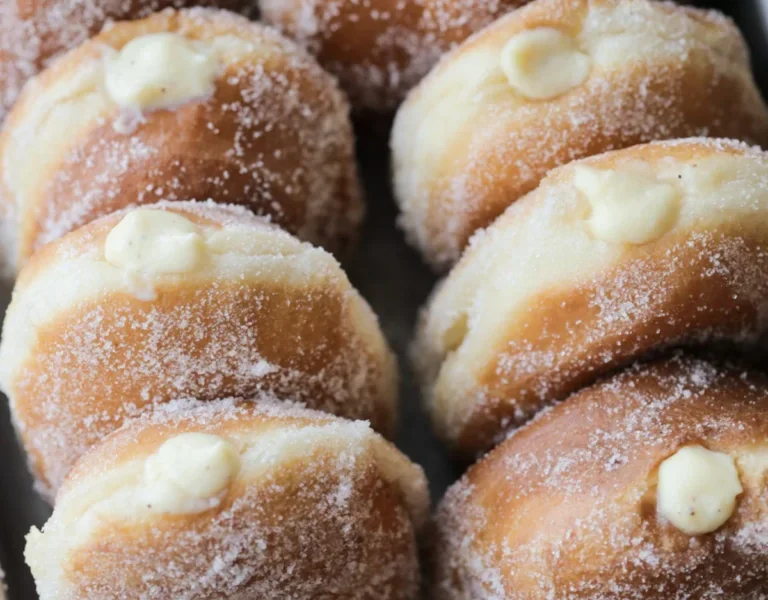
These Sourdough Vanilla Custard Donuts are soft, fluffy, and golden on the outside, with a delicate sourdough flavor and a luscious homemade vanilla custard filling. The dough develops wonderful depth and tenderness through natural fermentation, while the lightly crisp exterior provides the perfect contrast to the smooth, creamy custard inside.
Unlike traditional yeast-raised donuts, these donuts rely entirely on an active sourdough starter for fermentation. The process requires patience, but much of the time is hands-off, allowing the dough to slowly develop its flavor and texture.
Once fried, the donuts are coated in granulated sugar and generously filled with silky vanilla custard. They are perfect for breakfast, brunch, afternoon treats, or a special homemade dessert.
Why I Love This Recipe
I love these donuts because they combine three irresistible elements: naturally fermented sourdough dough, a lightly crisp golden exterior, and rich vanilla custard.
The sourdough fermentation gives the donuts a deeper, more complex flavor than a quick donut recipe, while the milk, eggs, butter, and sugar create a wonderfully tender and soft crumb. The homemade vanilla custard adds a smooth, creamy center that makes every bite feel special.
Another benefit is the flexible fermentation schedule. The dough can be prepared ahead and refrigerated overnight, making it easier to fit the recipe into your schedule while allowing the sourdough flavor to develop further.
Ingredients
For the Sourdough Donut Dough
- 100 g active sourdough starter, 100% hydration
- 500 g all-purpose or bread flour
- 180 g whole milk, lukewarm
- 2 large eggs
- 60 g granulated sugar
- 60 g unsalted butter, softened
- 8 g salt
- 1 teaspoon vanilla extract
For the Vanilla Custard
- 500 ml whole milk
- 4 large egg yolks
- 90 g granulated sugar
- 35 g cornstarch
- 1 teaspoon vanilla extract
- 25 g unsalted butter
- Pinch of salt
For Frying and Finishing
- Neutral frying oil, such as vegetable, canola, or sunflower oil
- Granulated sugar, for coating
Before You Begin
For successful sourdough donuts, use an active and healthy starter. It should be bubbly, pleasantly fermented, and visibly rise after feeding. Ideally, use the starter close to its peak activity.
A weak or inactive starter may not provide enough fermentation to properly aerate the dough.
Because sourdough fermentation is influenced by temperature, the exact timing can vary. A warm kitchen may speed up fermentation, while a cooler environment can require considerably more time. Focus on the appearance and texture of the dough rather than following the clock alone.
How to Make Sourdough Vanilla Custard Donuts
Step 1: Prepare the Dough
Add the active sourdough starter, lukewarm milk, eggs, sugar, and vanilla extract to a large mixing bowl.
Whisk until the ingredients are well combined.
Add the flour and salt, then mix with a wooden spoon or dough whisk until a shaggy dough forms.
Cover the bowl and allow the dough to rest for approximately 20–30 minutes. This short resting period allows the flour to hydrate and makes the dough easier to develop.
Step 2: Develop the Dough
After the resting period, gradually incorporate the softened butter.
Add the butter a little at a time, working each addition into the dough before adding more.
The dough will initially feel sticky and somewhat messy. Continue kneading until the butter is completely incorporated and the dough becomes smoother and more elastic.
You can knead by hand or use a stand mixer fitted with a dough hook.
Because this is a rich dough containing milk, eggs, butter, and sugar, it can take longer to develop than a basic sourdough dough.
Do not add excessive flour simply because the dough feels sticky. A slightly tacky dough is preferable to one that has become overly firm from too much flour.
Step 3: Bulk Fermentation
Transfer the dough to a lightly greased bowl and cover.
Allow it to ferment at room temperature for approximately 4–8 hours, depending on the strength of your starter and the temperature of your kitchen.
The dough does not necessarily need to double. Instead, look for a noticeable increase in volume, a smoother appearance, and visible airiness.
If the dough needs additional strength, you can perform one or two gentle stretch-and-folds during the first couple of hours.
Step 4: Overnight Fermentation
For a convenient make-ahead option and additional flavor development, refrigerate the dough after bulk fermentation.
Cover the bowl tightly and refrigerate for approximately 8–12 hours.
The chilled dough will also become easier to handle and shape.
The following day, remove the dough from the refrigerator and allow it to sit briefly at room temperature if it feels especially firm.
Preparing the Vanilla Custard
The custard can be prepared while the dough ferments or a day ahead.
Step 5: Cook the Custard
- Add the egg yolks, sugar, cornstarch, and salt to a medium saucepan.
- Whisk until smooth.
- Gradually add the milk while whisking continuously to prevent lumps.
- Place the saucepan over medium-low to medium heat.
- Continue whisking as the mixture heats and thickens.
- Once the custard becomes thick and creamy and begins to bubble gently, continue cooking for approximately 30–60 seconds while whisking.
- Remove from the heat.
- Add the vanilla extract and butter.
- Whisk until the butter has completely melted and the custard is smooth.
- Transfer the custard to a clean bowl.
- Press plastic wrap directly against the surface to prevent a skin from forming.
- Refrigerate until completely chilled.
Shaping the Donuts
Step 6: Roll and Cut
Place the fermented dough on a lightly floured work surface.
Gently roll the dough to approximately 1.5 cm thick, taking care not to press all the air out.
Using a round donut or biscuit cutter approximately 7–8 cm wide, cut the dough into individual rounds.
Transfer the rounds to parchment-lined baking sheets, leaving enough room for them to expand.
Gather the scraps and gently reroll them once. Avoid repeatedly working the scraps, as excessive handling can make the finished donuts tougher.
Step 7: Final Proof
Cover the shaped donuts loosely with plastic wrap or a clean kitchen towel.
Allow them to proof at room temperature for approximately 1–3 hours, depending on the temperature of your kitchen and the strength of your starter.
The donuts should look noticeably puffy, light, and airy.
Avoid rushing this stage. Under-proofed donuts can become dense, while over-proofed dough can become fragile and difficult to handle.
Frying the Donuts
Step 8: Heat the Oil
Pour neutral oil into a deep, heavy-bottomed pot, using enough oil for the donuts to float freely.
Heat the oil to approximately 175°C (350°F).
A kitchen thermometer is strongly recommended because maintaining a consistent temperature is essential for evenly cooked donuts.
- Oil that is too hot can brown the exterior before the center cooks.
- Oil that is too cool can cause the donuts to absorb excess oil.
- Overcrowding the pot can cause the oil temperature to drop quickly.
Step 9: Fry
Carefully lower a few proofed donuts into the hot oil.
Do not overcrowd the pot.
Fry for approximately 1½–2 minutes per side, depending on their thickness and the oil temperature.
Turn them gently using a slotted spoon or chopsticks.
The finished donuts should be golden brown and nicely puffed.
Transfer them to a wire rack lined with paper towels to drain excess oil.
Allow the oil to return to the correct temperature before frying the next batch.
Step 10: Coat With Sugar
While the donuts are still warm, gently roll them in granulated sugar.
The warm surface allows the sugar to adhere nicely.
For a less sweet finish, you can skip the sugar coating and dust the finished donuts with powdered sugar instead.
Fill the Donuts With Vanilla Custard
Step 11: Add the Custard
Transfer the chilled vanilla custard to a piping bag fitted with a small round tip.
Use a skewer, chopstick, or small knife to create a small opening in the side of each donut.
Insert the piping tip into the opening and gently squeeze until the donut feels heavier and the custard fills the center.
Avoid overfilling, as too much pressure can cause the donut to split.
Repeat with the remaining donuts.
For an extra decorative finish, you can pipe a small swirl of custard on top before serving.
Tips & Tricks for Perfect Sourdough Donuts
Use an Active Starter
Your starter should be bubbly, strong, and active before beginning. A weak starter can result in donuts that are dense and slow to rise.
Don’t Add Too Much Flour
Rich sourdough dough can feel sticky during mixing. Resist the temptation to add large amounts of flour. Too much flour can make the donuts heavy rather than light and fluffy.
Watch the Dough, Not Just the Clock
Fermentation times can vary significantly depending on room temperature and starter activity. Look for increased volume, airiness, and a smoother dough rather than relying solely on a specific number of hours.
Give the Donuts Enough Time to Proof
Proper final proofing is essential for a light interior. The shaped donuts should look noticeably puffy before they go into the oil.
Maintain the Oil Temperature
Keep the frying oil close to 175°C (350°F). A thermometer makes this much easier and helps prevent greasy or undercooked donuts.
Fry in Small Batches
Avoid overcrowding the pot. Too many donuts at once can lower the oil temperature and result in uneven frying.
Keep the Custard Chilled
Cold custard is easier to pipe and less likely to make the donut messy during filling.
Cool Before Filling
Allow the fried donuts to cool enough to handle comfortably before adding the custard. This helps prevent the custard from becoming overly loose.
Common Mistakes to Avoid
Inactive Starter
An inactive starter may not have enough strength to properly ferment the dough.
Excess Flour
Adding too much flour can turn a soft, enriched dough into a dense one.
Under-Proofing
Donuts that have not fermented and proofed sufficiently can remain heavy and compact after frying.
Over-Proofing
Over-proofed donuts can become fragile and may collapse when handled or fried.
Incorrect Oil Temperature
Oil that is too hot or too cool can negatively affect both the exterior and interior texture.
Overcrowding the Pot
Frying too many donuts simultaneously can cause the oil temperature to drop and lead to greasy results.
Vanilla Custard Tips
For the smoothest custard, whisk continuously while cooking.
The cornstarch needs sufficient heat to properly thicken the mixture, but the custard should not be cooked over excessively high heat because the eggs can scramble.
If a few lumps develop, strain the warm custard through a fine-mesh sieve.
Always allow the custard to cool completely before filling the donuts.
Flavor Variations
Chocolate Custard Donuts
Create a chocolate filling by incorporating unsweetened cocoa powder into the custard and adjusting the sweetness to taste.
Lemon Vanilla Donuts
Add finely grated lemon zest to the custard for a fresh citrus note.
Cinnamon Sugar Donuts
Combine granulated sugar with a little cinnamon and use the mixture to coat the warm donuts.
Strawberry Custard Donuts
Add finely chopped fresh strawberries to the chilled custard just before filling, or serve the donuts with fresh berries.
Orange Vanilla Donuts
Add a small amount of finely grated orange zest to the dough or vanilla custard for a subtle citrus flavor.
Can These Donuts Be Baked?
These donuts are designed to be fried, which creates their characteristic golden exterior and fluffy interior.
They can be experimented with as baked donuts, but the texture will be different.
For a baked version, place the proofed donuts on a parchment-lined baking tray and bake at approximately 180°C (350°F) until lightly golden and cooked through. Brush them with melted butter after baking and coat with sugar if desired.
Storage Instructions
These donuts are best enjoyed fresh on the day they are made.
Because they contain homemade vanilla custard, filled donuts should be stored in the refrigerator.
Place them in an airtight container and consume within approximately 1–2 days for the best quality.
Refrigeration can make the donut slightly firmer. Allowing it to sit at room temperature briefly before serving can help improve the texture.
For food safety, avoid leaving custard-filled donuts at room temperature for extended periods.
Freezing Instructions
For the best results, freeze the fried donuts before filling them with custard.
- Allow the fried donuts to cool completely.
- Arrange them on a baking sheet and freeze until firm.
- Transfer them to a freezer-safe container or bag.
- Thaw at room temperature.
- Fill with freshly prepared vanilla custard before serving.
The custard can also be frozen separately, although its texture may change slightly after thawing.
Serving Suggestions
Serve these sourdough vanilla custard donuts with:
- Freshly brewed coffee
- Tea
- Hot chocolate
- Fresh berries
- Powdered sugar
- Cinnamon sugar
- Berry sauce
- Vanilla ice cream
For a bakery-style presentation, dust the finished donuts lightly with powdered sugar just before serving.
Frequently Asked Questions
Can I use sourdough discard?
An active sourdough starter is recommended because the starter provides the fermentation and rise needed for this recipe. Sourdough discard alone will not reliably create the same fluffy result.
Why are my donuts dense?
Dense donuts can result from an inactive starter, insufficient fermentation, under-proofing, excessive flour, or an unsuitable frying temperature.
Can I prepare the dough overnight?
Yes. After bulk fermentation, refrigerating the dough for approximately 8–12 hours is a convenient way to prepare ahead while allowing additional flavor development.
Can I make the custard ahead of time?
Yes. The vanilla custard can be prepared up to a day ahead and refrigerated until needed.
What temperature should the oil be?
Aim for approximately 175°C (350°F). A kitchen thermometer is the most reliable way to maintain the proper temperature.
Why are my donuts greasy?
Oil that is too cool can cause the donuts to absorb excess oil. Overcrowding the pot can also lower the temperature significantly.
Can I use bread flour?
Yes. Bread flour can provide additional structure and chewiness, while all-purpose flour can produce a slightly softer texture.
Recipe at a Glance
Prep Time: 45 minutes
Fermentation: 5–10 hours, depending on conditions
Final Proof: 1–3 hours
Frying Time: Approximately 15–20 minutes
Total Time: Varies according to fermentation
Yield: Approximately 14–16 donuts
Frying Temperature: 175°C (350°F)
Final Thoughts
These Sourdough Vanilla Custard Donuts are a rewarding homemade pastry project that combines naturally fermented dough with a rich, silky vanilla filling. The sourdough brings subtle tang and depth, while the fried exterior becomes beautifully golden and lightly crisp around a soft, airy center.
The most important part of the recipe is patience. Give the starter enough time to ferment the dough, allow the shaped donuts to become properly puffy before frying, and maintain a steady oil temperature throughout cooking.
For the freshest texture, fill the donuts shortly before serving. Whether finished with simple sugar, powdered sugar, cinnamon sugar, or paired with fresh berries, these homemade sourdough donuts make an impressive treat for breakfast, brunch, or dessert.